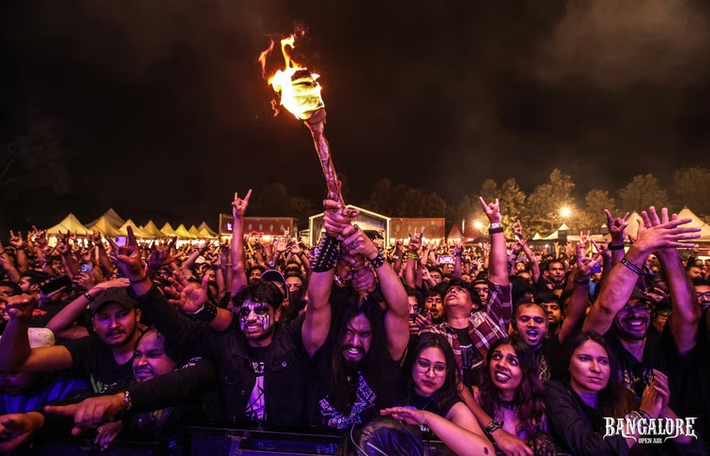
Heavy music has always existed on the fringes of India's musical landscape. While mainstream audiences gravitated toward Bollywood, rock, and independent pop, another community quietly grew inside rehearsal rooms, college festivals, underground venues, and local gig circuits. It wasn't built for radio, television, or commercial success. It was built purely through passion.
Among the many branches of extreme metal, deathcore eventually found its place. Combining the brutality of death metal with the breakdown-driven energy of metalcore, the genre attracted a new generation of musicians eager to push heaviness even further.
"The Indian deathcore scene wasn't built overnight. It was built one rehearsal, one demo, and one underground show at a time."
Before Deathcore Arrived
Long before Indian bands began experimenting with deathcore, extreme metal already had passionate followers. Death metal, black metal, thrash metal, and metalcore communities had been organizing local gigs and creating original music despite limited resources.
International bands became increasingly accessible through CDs, internet forums, YouTube, and eventually streaming platforms. Young musicians suddenly had access to styles that were almost impossible to discover only a decade earlier.
A Scene Built Without an Industry
Unlike many countries with established heavy music industries, Indian bands rarely had professional managers, booking agencies, record labels, or financial support. Almost everything was done independently.
- Writing original music
- Recording albums independently
- Booking venues
- Designing merchandise
- Managing social media
- Organising tours
- Transporting equipment
Every successful show represented months of preparation by musicians, promoters, photographers, sound engineers, and fans working together simply because they believed the scene deserved to exist.
Small Crowds, Massive Energy
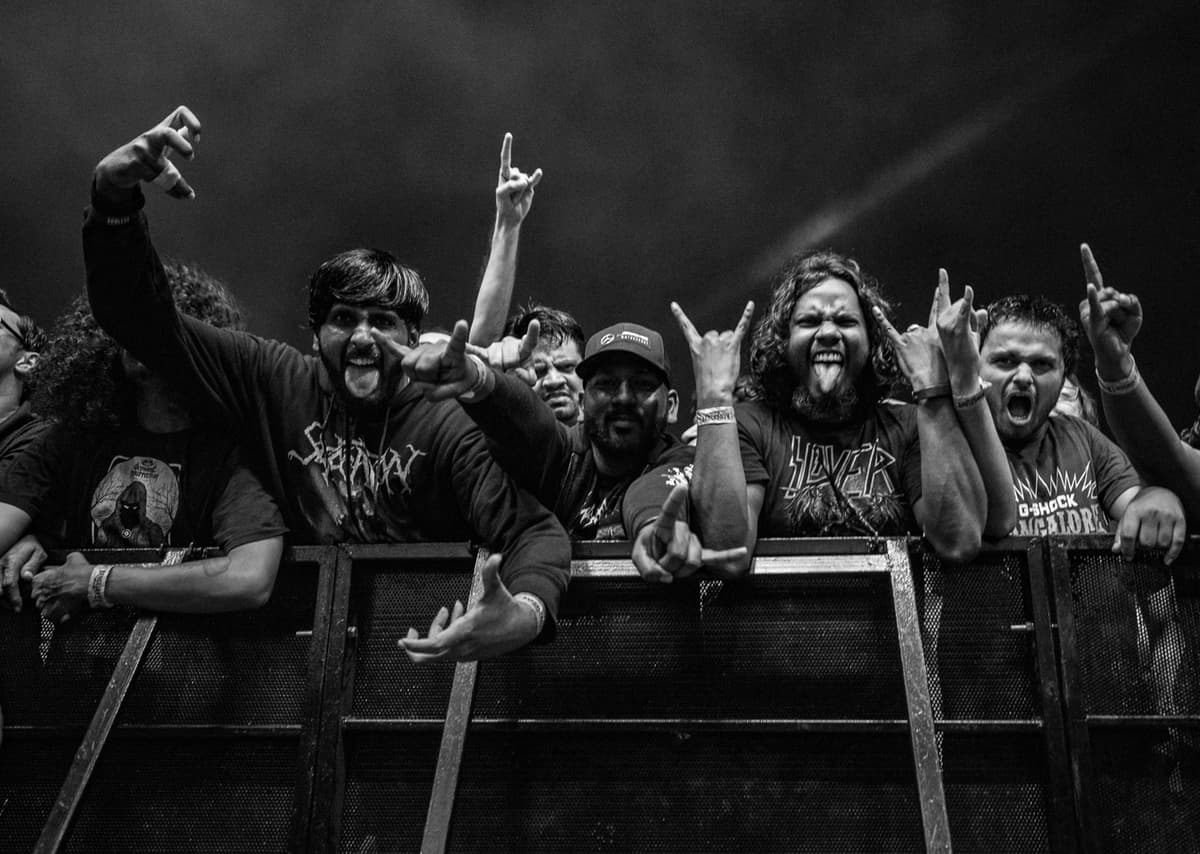
Underground success has never been measured purely by attendance. Some of the most memorable performances happened in front of fifty people packed inside a small venue where every attendee knew every lyric.
Those intimate shows created friendships, collaborations, and opportunities that eventually helped the Indian deathcore community expand beyond city borders.
Did You Know?
Many Indian extreme metal bands still operate independently, handling everything from songwriting and merchandise to touring and promotion without major label support.
The Digital Revolution
Social media fundamentally changed how Indian heavy bands reached listeners. Platforms like YouTube, Facebook, Instagram, Spotify, and Bandcamp allowed artists to share music directly with global audiences without relying on traditional music companies.
As more listeners discovered Indian bands online, musicians began collaborating internationally, touring abroad, and raising the overall standard of songwriting, production, and live performances.
The Scene Today
Modern Indian deathcore is stronger than ever. Bands continue to release increasingly polished records, perform internationally, and prove that world-class heavy music can emerge from the Indian underground.
While challenges remain, the movement continues to grow because of the people behind it—musicians, promoters, photographers, designers, venues, and fans who refuse to let the underground disappear.
"Scenes aren't built by one band. They're built by everyone who shows up."